Be yourself; Everyone else is already taken.
— Oscar Wilde.
This is the first post on my new blog. I’m just getting this new blog going, so stay tuned for more. Subscribe below to get notified when I post new updates.
Be yourself; Everyone else is already taken.
— Oscar Wilde.
This is the first post on my new blog. I’m just getting this new blog going, so stay tuned for more. Subscribe below to get notified when I post new updates.
Taylor Swift’s an enigma: to the sneering public, she’s a plastic manufactured ex-country turned pop star, cold and calculated, her career bought by her father. To her most adoring fans, she’s a woman who can do no wrong, her pen writing the catchiest songs of the summer – and the most heart-wrenching ballads if you dig beyond the pop gloss.
Folklore is Taylor Swift dropping everything people knew about her, and emerging as a new artist altogether. She reclaims her narrative lyricism wholeheartedly now, once common in her country albums but has grown harder to find recently, piecing together words that paint an elaborate picture for the listener, planting them right into the story she weaves. But unlike past albums, where she shares her own heartbreaks in cutting detail, Folklore is a combination of dreamed-up stories, fantastical scenarios told through song:
In “Epiphany”, a soldier bleeds out on a shore, a woman’s vitals come crashing down, and the doctors don’t know what to do. (“Something med school did not cover / someone’s daughter, someone’s mother / holds your hand through plastic now)
In “Seven”, a child hopes to escape to India with her best friend, running from an abusive father and a haunted household. (I’ve been meaning to tell you / I think your house is haunted / Your dad is always mad and that must be why / And I think you should come live with me / And we can be pirates / Then you won’t have to cry / Or hide in the closet)
Semblances of truth still lie in fables however. In “Folklore”, there’s no “moral of the story”, no clear lessons learned – instead, the truth is found through the way the fantasies transform into allegories of her own life. “Mad Woman” details a witch hunt, people chasing down a woman until she goes insane and violently gets revenge. (Does she smile? / Or does she mouth fuck you forever?) But while listening to it, it’s impossible to not draw a connection to the Kanye/Taylor fiasco of 2016 where she was dragged through the mud – only recently has her name been cleared.
Her connection to some songs are much clearer, such as in “The Last Great American Dynasty”. Taylor’s narrative songwriting is at its strongest here as she paints the story of Rebekah Harkness in all its Great-Gatsby bourgeois glory (“Rebekah gave up on the Rhode Island set forever / Flew in all her Bitch Pack friends from the city / Filled the pool with champagne and swam with the big names). But just like F. Scott Fitzgerald has Daisy ruin everything, Taylor calls out Rebekah for being “the death of the last great American dynasty”, the “most shameless woman this town has ever seen”. However, Taylor soon brings herself into the narrative, revealing in a sudden twist that she took in Rebekah’s Rhode Island estate, along with Rebekah’s legacy for destruction and “un-American” values. (“Holiday House sat quietly on that beach / Freed of women with madness, their men and bad habits / And then it was bought by me”). What was once Taylor criticizing Rebekah for her hedonism and shamelessness turns into Taylor self-reflecting and breaking out of her internalized misogyny as she realizes that maybe it isn’t Rebekah or herself that needs to change – maybe it’s values of the “American Dynasty” that need to change, that need to be destroyed. (“There goes the loudest woman this town has ever seen I had a marvelous time ruining everything / A marvelous time”)
Throughout all 16 stellar tracks, “mirrorball” shines the brightest in all it’s shoe-gaze dream-pop glory. Drenched in soft harmonies lies Taylor at her most vulnerable – questioning whether she’s a worthy celebrity (I’ve never been a natural / All I do is try, try try), criticizing herself for trying too hard at the same time (“I’m a mirrorball / I change everything about myself to fit in), and breaking apart in the process while the world watches (“The masquerade revelers / Drunk as they watch my shattered edges glisten”).
Taylor builds a mystical world from her imagination in her eighth studio album, combining her truth and stranger’s fictions into folklore: fables to be passed on, myths to learn from. Maybe Taylor Swift’s a little too ambitious, maybe she’ll be forgotten in a hundred years, her songs lost and buried in the past – but this is her trying.
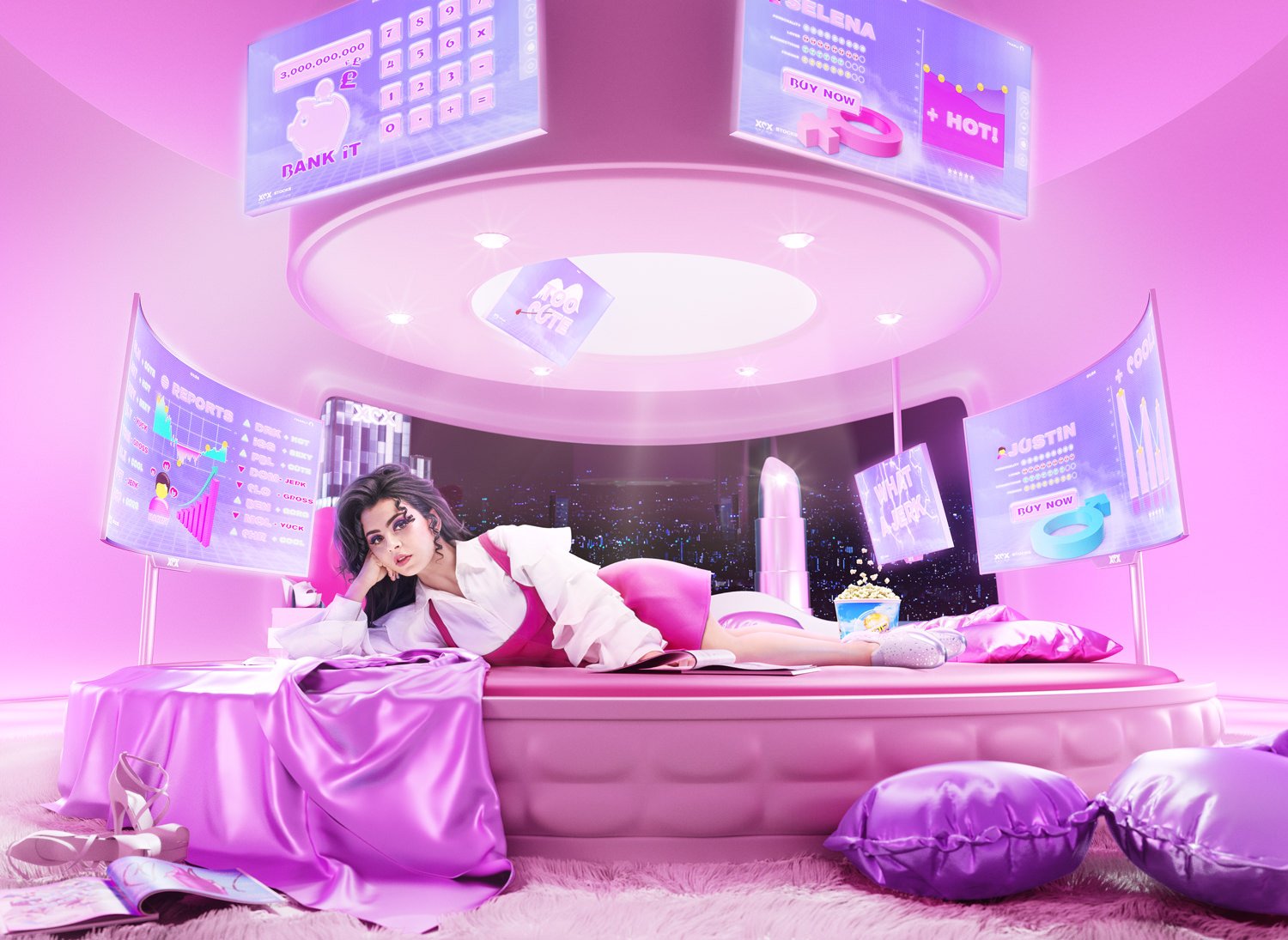
Right now, Charli XCX is heralded as the “pop star of the future”, named by acclaimed magazines as the “anti-popstar” by Pitchfork and other sites. But before she became a critical darling, she was a commercial success: deemed a typical sellout popstar, but a successful one. She started off her career and was thrown into the spotlight with multiple top ten hits, such as Fancy featuring Iggy Azalea, Boom Clap, and Break the Rules, dominating the radios around 2014-2015. But the more she became the stereotypical pop-star, controlled by her managers and forced to stay within the boundaries of what’s considered acceptable in the pop field, the more she craved authenticity. This is shown through her mixtape, Pop2, a blend of her need for creativity and authenticity with the basic pop-algorithm. She pushes pop, stereotypically seen as a basic, meaningless, and shallow form of music, to its very limits. As she says in “Femmebot”, one of the songs off the mixtape, “I’m an upgrade of your stereotype’.
It’s a bold statement but she fulfills this promise.

POP2’S OVERARCHING CONCEPT IS: “WHAT WOULD POP MUSIC SOUND LIKE IN THE FUTURE? IN THE NEXT 50/100 YEARS?”
For Charli, the future consists of a hyper-developed, technology-reliant, robotic world, where humanity is lost. Thus, even the pop music of the future lacks any sort of humanoid quality, as Charli purposefully layers her voice in Pop2 with autotune, in order to make the entire project sound apathetic and sterile, as if it was created by a robot specifically catered to make pop music.
However, not only does the project sound futuristic, but lyrically, the project embodies the lack of meaning and connection caused by futuristic technology, in a society similar to the World State. For Charli, the future is a world where love and true emotions no longer exist; materialism and hedonism are the highest values; Porsches and other luxury items are venerated. Everyone excessively parties to prevent themselves from feeling something, to escape from their emotions. Throughout the mixtape, Charli confronts the loneliness and lack of human connection caused by such a society and demonstrates humanity’s inherent need for something deeper than pleasure and happiness: love. However, Charli also embodies the difficulty in attaining emotional connection in a society specifically structured to place happiness as the highest value. In her journey for love and connection, she encounters pain, heartbreak, and more, and once things get difficult, she ultimately resorts to hedonistic pleasures, such as partying, as an emotional refuge, to forget about it all: her values, her desire for love, her morals. Thus, Pop2 represents the choice between emotional connection, which comes with pain, or simple hedonistic pleasures, which allows one to forget about one’s need for more than happiness.
The opening track of Pop2, “Backseat” featuring Carly Rae Jepsen, introduces Charli’s emotional isolation and her use of hedonistic pleasures as a coping mechanism to numb her loneliness. The song starts with grating uncanny synths, introducing the listener to the futuristic soundscape and concept of the album. Charli’s use of strange industrial sounds, not only at the beginning, but throughout the album, continue to remind the listener that Pop2 takes place in charli’s vision of a future society, everything is replaced by technology, even music. Drums and keyboards no longer exist, and are instead replaced by robot computer-engineered sounds. In the Pop2 world, music is no longer used as a form of connection or expression, as it is all engineered through technology and computer algorithms.
VERSE 1
I can’t escape all the voices, and so, I turn it up
I go to parties with strangers so I can figure it out
Run through a city at midnight to feel like a star
I want it all, even if it’s fake
In the futuristic world that Charli envisions humanity to be in 50 years, she believes people will use hedonism and escapism as a coping mechanism to the lack of values of the world, which the first verse describes.; When the voices in her head desire something more than simple pleasures, something of value, she uses music to drown them out. But when that doesn’t work, she goes to “parties with strangers”; not to form connections, but to escape and have fun through physical pleasure. In a world where she’s constantly surrounded by bodies, she may be physically connected, but alas, they’re all ‘strangers’ and she lacks any sort of emotional connection to them. She does it all, just to ‘feel like a star’: to feel happiness and simple pleasure, at the expense of deeper values such as true emotional connection. But Charli isn’t blind. She’s a self-aware hedonist, and knows that her happiness is ‘fake’ and ‘shallow’, but she wants it BECAUSE they allow her to let go of deeper values such as connection. They let her ‘escape’ the voices that desire for more, for values, values that she believes are hurtful as shown in the next verse.
VERSE 2
Breakin’ your heart, split it in half
Told you it all (told you it all)
Year and a half, are we in love?
I’ll never know (I’ll never know)
I know I’m wrong, what a mistake
Don’t ever change (don’t ever change)
I can’t escape all the voices, and so, I turn it up
In the second verse, Charli recounts the instability and pain one must endure once one searches for love and real connections. The desire for love inevitably comes with heartbreak, pain, and insecurity, which has caused Charli to denounce love and consider her desire for deep values as “a mistake”. However, her cynicism for deeper emotions is only surface-level, as she admits that inside, she’ll “never change’. She’ll never stop yearning for true connection and love, but in order to protect herself and avoid the pain that comes with deeper values, she chooses to resort to hedonism, “turning it up” and drowning out her desire for connection.
CHORUS
(Your song) so loud
(Drivin’) so fast
I’m better off alone
All alone, all alone, all alone
The chorus consists of Charli indulging in hedonism, overloading her senses (driving fast, playing loud music) in order to avoid her desires for connection.
Once again, Charli describes sound and music not as a form of connection and meaning, but as something that can be turned up, can be so loud as to overload the senses and drown out her desires for connection that she knows will cause pain. In the end, she tries to convince herself that she’s “better off alone”, free of any meaningful human connection, but also free of the pain that comes with it.
However, in the post-chorus, Charli’s use of hedonism fails to prevent her yearning for human connection, as shown by how she repeats, “All alone”. Her attempts to distract herself only serve as a reminder of how alone she truly feels, and the repetitiveness of the phrase, “all alone”, only serves to show how crushing her loneliness is.
As the song progresses, the phrase “all alone” becomes more and more distorted each time it’s repeated. As layers of autotune and distortion slowly get added to Charli’s vocals, they become less and less human, and more and more robotic, showing how Charli’s hedonism and lack of human connection eventually strips away her humanity, making her no different than a robot. Eventually, her cries of loneliness become so distorted and robotically warped that one can’t possibly make out her words.. They get lost in the industrial synths, showing how her reliance on technology and sensory overload to escape her loneliness has completely overwhelmed her. In her attempt to avoid the pain that comes with human connection, she’s become a robot of the society she lives in, with no values whatsoever.
FEMMEBOT
However, even though, by the end of BackSeat, Charli becomes a ‘robot’ and has lost humanity, not all hope for connection and values in the future is lost.
In FemmeBot, Charli also shows that love and connection can still prevail in such a technological and futuristic society, where even robots, who typically lack humanity and values, can also find connection/love. The track was inspired by the feminine robots created today, such as robots like Sophia and others, who are hyper-sexualized today. Instead of viewing the sexualization of robots as something weird, Charli views it as hope: hope that if soulless products of technology can find love or be loved, then so can humans.
But more importantly, Charli describes how the future isn’t always negative. With the future and the technology it brings, Charli predicts that gender boundaries would grow more and more blurred as humanity lets go off conservative values and grows more accepting of people that “transgress” typical gender identities. Plus, as technology advances, more and more people would be able to get the body modifications that allow them to embody their true gender, without fear of having to hide who they truly are.
This blur in gender boundaries is shown through the two guest artists, Dorian Electra and Mykki Blanco. Dorian Electra, through the use of vocal effects, comes off as both feminine and masculine at the same time, while Mykki Blanco, a male rapper, raps about being a femmebot, showing the dropping of traditional values and the potential the future has.
TRACK 10
The song starts of with a bunch of glitches, messed up, distorted and industrial sounds, representing the hedonistic technological future. However, the instrumental quickly strips itself off the strange futuristic sounds heard throughout the album, and are replaced with bird chirps and a xylophone. This switch towards natural sounds, such as the bird chirps, is accompanied by Charli’s most vulnerable and emotional lyrics in the album, proving Charli’s point that technology of the future often strips one of one’s humanity and ability to feel emotions, and that a reversion towards the past, towards nature, allows one to regain their humanity and vulnerability.
Throughout the entire mixtape, we see Charli running away from human connection, using parties, drugs, and technology to escape from her desire for love. However, in Track 10, the closing track of the album, Charli is at her most vulnerable and opens up about why she runs from intimacy.
VERSE 1
Every time you get too close I run, I run away
And every time you say the words, I don’t know what to say
Back, back to the beginnin’ really wish that I could change
I do, I do (I do)
As she admits in verse 1, she doesn’t despise the value of love: in fact, she truly wishes she could “go back to the beginning” and change. She wishes she could find love, but she views intimacy as something dangerous, as shown in the chorus.
CHORUS
I blame it on your love
Every time I fuck it up
I blame it on your love, I do
She reveals the dangers of intimacy lie in her self-destructive tendencies. Whenever she gets a relationship or connection with someone, she always messes up, and instead of owning up to her own errors, she instead blames it on the emotion of love. By repeatedly deflecting the blame onto love, she herself begins to fear love, and resorts to hedonism in order to forget about connection and escape from her desire for love. Her fear for love and the self-destructive tendencies that love brings have caused her to run away from intimacy, and self-sabotage her relationships with hedonistic pleasures whenever she gets too close with someone.
However, as the song progresses, Charli realizes that her habit of blaming her own mistakes on love was wrong, and owns up to it, saying “sorry, I blame it on your love”. She realizes that it isn’t love she needs to be afraid of, it’s her own responsibility and destructive hedonistic habits that have destroyed her connections. As she owns up and apologizes, the instrumental swells up and into some sort of futuristic choir, appropriate for the revelation she just experienced.
Through the sheer vulnerability of Track 10, Pop2 ends with a trace of humanity, showing that in a world so advanced, maybe human connection can continue to stay.
My friends and I (E, A, R) decided to listen to Chromatica, rating the songs as we listened to them. Enjoy!

ALICE:
E: 5/10: “miss halsey in a mall”
A: 5/10: “lyrics give me chlamydia”
R: 6/10: “second verse was a trip”
STUPID LOVE:
E: 7/10: ME! energy
A: 6/10: not bad but not good as a comeback song
R: 7/10: a little basic
RAIN ON ME:
E: 9/10
A: 9/10
R: 10/10
universal consensus: brilliant, showstopping, amazing
FREE WOMAN:
E: 7/10: likes the chorus
A: 3/10 yawn, made him sleepy
R: 5/10: gaga needs to stop the instrumental breakdowns and 2012 rihanna energy
FUN TONIGHT:
E: 7/10
A: 6/10 not very fun
R: 8/10: i love it she’s a bop
911
E: 5/10 : “poker face but ratchet”
A: 2/10 “this is noise”
R: 6/10 the way chromatica II blends into 911 is everything (and i kinda like this one on 2nd listen)
PLASTIC DOLL:
E: 7.5/10: “love this one”
A: 7/10: understands what miss gaga is going for
R: 8/10: intro giving me ol mcdonald energy (2nd listen: i love the femmebot theme)
SOUR CANDY: ft blackpink
E: 3/10 hates gaga’s vocals on this one
A: 8/10 blackpink ate this one up
R: 8/10 blackpink ate this one up
ENIGMA:
E: 6.5/10 “she starts out cute but then she just keeps going and going and going and keeps going and keeps going and then i get bored”
A: 5/10
R: 6.5/10 “killer vocals” but she needs to stop these boring instrumentals
REPLAY:
E: 5/10
A: 6/10 overall: we liked the chorus but once again the instrumental is 2012 and forgettable
R: 5/10
overall: we liked the chorus but once again the instrumental is 2012 and forgettable
SINE FROM ABOVE FEAT. ELTON JOHN
E: 6/10: “lyrics give me moana/disney energy”
A: 7/10 really good until elton john
R: 8/10 “i love love love it so much, the charli xcx print at the end is everything”
1000 Doves:
E: 6/10
A: 6/10
R: 6/10
Babylon:
E: 9/10 loves it, hates first verse bc she talking about religion i think
A: 3/10 (editor’s note: this score is homophobic)
R: 9/10 what i was waiting for in this album honestly, babylon = babble on omg
Consensus: seems like it was made for drag race/vogue
OVERALL : 6.2
Note: upon second listen, Chromatica improved greatly and in my opinion, deserves an 8.


Ayesha Erotica’s track, “Vacation Bible School”, is a sugary bundle of pure euphoric electro-pop. With its Y2K influences, bubbly synths, and sass, there’s no question as to why it became a trending sound on Tik Tok. The explosive chorus, “Now it’s fine, because I’m a whore / and I sleep with guys, just for fun and drugs” is a guaranteed (slightly problematic) ear-worm, but there’s more to “Vacation Bible School” than what meets the eye.
For a song that talks about one’s indulgence in hedonistic pleasures like sex, drugs, and alcohol, the title “Vacation Bible School” is highly misleading, to the point of hilarity. In fact, the top comment on Youtube for the song is by a confused listener, stating that “this is not a Bible School song and this should be a different song and why would you sing the song ever”.

But the juxtaposition between religion, what is normally seen as pious and conservative, and the blunt hedonism that Ayesha fully indulges in, is what makes the song so interesting. She constantly associates religion with sex, (“Bible study, we were buddy-buddy/ Then you said that we should fornicate”) effectively reducing religion to hedonism, a rather shallow form of pleasure and escape from suffering. In Ayesha’s modern “Brave New World”, filled with UGG boots and studded belts, religion and morality has no higher meaning than sex and drugs. The collapse of religion and morals is shown through how Ayesha “tried to call [Jesus]/ but boy, you didn’t add me back”, proving how the modern hedonistic world has no place for religion. Priests are simply “whores for Jesus”, just like how Ayesha is a “whore for drugs”. As a result, now that the overbearing morality that religion provides is rendered meaningless, Ayesha creates a rather enticing world free of judgement, where everyone is able to indulge in whatever they want and freely flaunt their inner desires. One cannot help but become drawn to the sheer freedom that Ayesha promises, which brings up the question: “is it better to have the modern world free of religion?” For Ayesha, if a world without religion allows one to experience freedom to indulge in whatever pleasures they want, then the answer to that is a resounding “yes”.

Today, in the midst of technological progress and modernity, we are already in Ayesha’s dream-world, almost fully independent from God. God might’ve existed before, in the past, but whether or not He exists, the new world no longer seems to have use for him. Mustapha Mond from “Brave New World” by Aldous Huxley perfectly captures this sentiment, stating that “one of the numerous things in heaven and earth that these philosophers didn’t dream about was this… us, the modern world.” When one is young, life is fulfilling and prosperous, with new sensations and pleasures to indulge in on the daily. However, once one ages, passions that once were invigorating grow stale, and without hedonistic distractions, one tends to turn towards religion; “we feel the need to lean on something that abides, something that will never play us false- a reality, an absolute and everlasting truth.” But with modernity, one may physically grow old, but the thrilling sensations will never die out. There’s always something new to do and obtain: new drugs, a new phone, more sex. As long as one continues to constantly indulge in pleasures, one will be able to escape the need for religion and morality and continue to embrace hedonism with complete freedom. Thus, through the glorification of hedonism in “Vacation Bible School”, Ayesha immortalizes the eternal freedom and prosperity that modernity brings; every synth, melody, and lyric stands as a celebration of hedonism, another new pleasurable sensation that further renders religion insignificant, but grants the gift of unrestricted freedom. In her world, Nietzche’s declaration that “God is dead” is a welcome one.


“Ribs” by Lorde, off of her debut album “Pure Heroine”, has grown to become the anthem of Generation Z, whether as background music to film-camera filter montages on Tik Tok or late-night solo karaoke sessions in the bedroom at 1 AM. The masterful way in which Lorde bundles fear, nostalgia, and adolescence in a four minute and twenty second deep-cut track leaves no question as to why “Ribs” has grown to become a cultural symbol of unbridled teen angst. Lorde perfectly encapsulates the universal experience of not being ready to grow up and take the final step into adulthood, leaving behind everything you’ve known once you turn 18 and close the door to your teenage years. And for those who are ready to move on, “Ribs” forces you to wistfully reflect and reminisce about your past with rose-colored glasses, despite how embarrassing it may have been. Some see “Ribs” as a song of the past, a pure rush of nostalgia, best left behind in past years of angsty glory. But the truth is, “Ribs” doesn’t want that. Lorde doesn’t want you trapped in your youth, with the same song on repeat, the same drinks spilt, the same fears, the same suburban streets, and the same friends. She emphasizes that we need to straddle the fine line between the past and future: to move on, keep growing, and embrace the future milestones and fears, all while holding on to the past with fondness. Without change, how could you possibly progress through life? And without the past to compare to, how could you possibly see how much you’ve progressed?
Lorde wrote this song after she and her friends hosted a giant house party while her parents were gone, “the kind of house party where people eating all the shit out of your fridge and freezer, like, defrosting things in your microwave…” (Lorde). Despite the absolute chaos and disorder the party devolves into, as symbolized through the spilt drinks and the same Broken Social Scene “Lover’s Spit” song playing on repeat, that night was an important milestone: not only was it a rebellious “fuck you” to her parents, but it was also a step into the realm of adulthood and responsibility. As Lorde puts it, “What we just did is cool. It’s cool. This house party? It’s adult. And there’s something scary about doing something that is in a different world than the one that you know” (Lorde). This fear of speeding through adolescence, knowing that one day, you’ll leave behind your entire identity and world of a suburban teenager, is all but enough to drive her and anyone else crazy. Every single act of rebellion and responsibility is met with the strange juxtaposing thoughts of both euphoria and fear. Euphoria for being able to say you’ve done it, and fear that you’ve crossed another milestone in your journey to both independence and responsibility. And it doesn’t matter if you’ve never been to a party, never drunk alcohol and haven’t lived a life straight from a teenage Netflix drama: the fear of responsibility is universal. For those with strict parents, the little stepping stones to adulthood, whether it’s being trusted enough to stay at home alone, going out past 11:00 PM, or sneaking out to Target, can be just as scary, daunting, but ever so “cool” and “adult” as Lorde’s rager.

Unlike most songs, the 1st verse of “Ribs” is lyrically the same as its 1st chorus. Lorde repeats “The drink you spilt all over me / …. / It drives you crazy getting old”, chanting the lines to the point where it almost becomes a cheer, a mantra for all those who share the same fears. However, despite the repetitive lyrical content, the first verse and the chorus could not be any more sonically different. The first verse is sung in a slow snail-paced drawl, backed only by a synth beat that reminds one of a sickly-hot monotonous summer. One could almost imagine Lorde herself: schools out, she’s enjoying herself in the moment, but at the same time fearful of the future and the responsibilities she must bear once the party’s over. However, once the chorus hits, harmonies appear and the words flow out of her mouth at a breakneck speed: so quick that it sounds like she’s struggling to fit in all the words within a sentence. Lorde has realized that the party of carefree teenage glory will eventually come to an end, sees the conclusion in sight, and just like how she tries to fit all the words into a sentence, she is now attempting to fit as many memories as she can into her teenage years before she’s unable to do so anymore. But no matter how fast she sings, no matter how many parties she throws, time is still ticking and soon she’ll run out of time. Before, she felt so proud and grown up sitting in her car, learning how to drive for the first time. Now, the mere thought of becoming old drives her crazy.

Lorde’s adolescence was once a fever dream, now it’s a nightmare. Instead of carefree nights out, Lorde and her friends are confused and dizzy, reeling through streets and time at a pace they wish they could slow down, but ultimately can’t. Like someone diagnosed with a terminal illness who decides to travel the world in their final years, Lorde tries to rush through experiences and memories, hoping to make the most of her time before she graduates. Despite the fact that she’s surrounded by family and friends, she knows time weakens all bonds. After all, we’ll lose touch with most of our childhood friends and we’ll only see our family during the holidays, all at the expense of responsibility and adulthood. The fact that we’ll have to forge new relationships in strange and uncomfortable environments is what makes us scared of growing old and Lorde and her friends have realized that.

The first bridge is a chant of desperation: a build-up of all the fears and stress of growing old. You can feel her distress, spilling into her burnt-out voice, as she longs for the times of the past. For Lorde, nostalgia is a drug, an addiction forcing her to stay stuck in the memories of the past, unable to move forward. She repeats the same lines over and over again: I want ’em back, I want ’em back”, hoping that if she says it enough times, with enough conviction, her dreams of a simpler past will finally manifest. But it won’t. Back then, as we stood on the precipice between childhood and teen-dom, it seemed like we had all the time in the world to grow. All the time in the world to develop into responsible, independent adults that we looked up to. But now that our teenage years are over, it’s impossible to think of a future where we aren’t teenagers living in suburbia, and are instead forced to worry about taxes, college, debt, full-time jobs. As the deadline to adulthood grows closer, we feel wholly unprepared. We feel cheated out of time to grow and develop. We feel too immature, too stupid, nothing like the adults we look up to. But alas, we’ll all inevitably end up walking through the one-way door to the future, leaving behind our past until it’s nothing but a faded daydream, lost in our minds.

Lorde paints an image of childhood innocence and simplicity as she reminisces over her past childhood, a time when the only thing she needed in life was her best friend. All she wants is to return to her youth where her world, brimming with unadulterated happiness, revolved merely around sleepovers, hangouts, and play-dates.
But that will never be enough.
Life is complex. Life is hard. But life revolves around progress and growth. We can’t be imprisoned by our fears of the future and stay within our comfort zones, never venturing forward to experience what a world full of independence and freedom can bring. Sure, the growing pains may hurt, but staying stuck in your youth, with the same friends, same city, same experiences, isn’t a life at all. When the time comes for us to split paths and march towards our own new horizons and responsibilities, hopefully we’ll be able to look back and see how far we’ve come in our journey to adulthood and let go, knowing that the future will always be brighter because the past will never be enough. It’s natural to get caught up in the past and reminisce over simpler times, but it’s important to not get trapped in the clutches of nostalgia.

This is an example post, originally published as part of Blogging University. Enroll in one of our ten programs, and start your blog right.
You’re going to publish a post today. Don’t worry about how your blog looks. Don’t worry if you haven’t given it a name yet, or you’re feeling overwhelmed. Just click the “New Post” button, and tell us why you’re here.
Why do this?
The post can be short or long, a personal intro to your life or a bloggy mission statement, a manifesto for the future or a simple outline of your the types of things you hope to publish.
To help you get started, here are a few questions:
You’re not locked into any of this; one of the wonderful things about blogs is how they constantly evolve as we learn, grow, and interact with one another — but it’s good to know where and why you started, and articulating your goals may just give you a few other post ideas.
Can’t think how to get started? Just write the first thing that pops into your head. Anne Lamott, author of a book on writing we love, says that you need to give yourself permission to write a “crappy first draft”. Anne makes a great point — just start writing, and worry about editing it later.
When you’re ready to publish, give your post three to five tags that describe your blog’s focus — writing, photography, fiction, parenting, food, cars, movies, sports, whatever. These tags will help others who care about your topics find you in the Reader. Make sure one of the tags is “zerotohero,” so other new bloggers can find you, too.
Have a WordPress.com account? Log in now.

